Every child learns differently. Some are hands-on explorers, others love to watch and imitate, while some thrive by listening and absorbing. Music lessons offer a unique opportunity to uncover how your child learns best and understanding their learning style can support not just their musical growth, but their confidence and success in school and life.
The Three Main Learning Styles
1. Visual Learners
Visual learners grasp information best through seeing. They may prefer sheet music, color-coded notes, or watching a teacher’s hands move on an instrument. Clear demonstrations, visual guides, and diagrams help these students excel. For example, a child learning piano might thrive by following annotated sheet music or observing hand positions step by step.
2. Auditory Learners
Auditory learners absorb information primarily through listening. They may pick up melodies by ear, repeat rhythms after hearing them once, or notice subtle nuances in tone. Singing, listening to recordings, and echo exercises help them internalize musical concepts quickly. An auditory learner might, for instance, hear a rhythm once and immediately reproduce it accurately, demonstrating how naturally they learn through sound.
3. Kinesthetic Learners
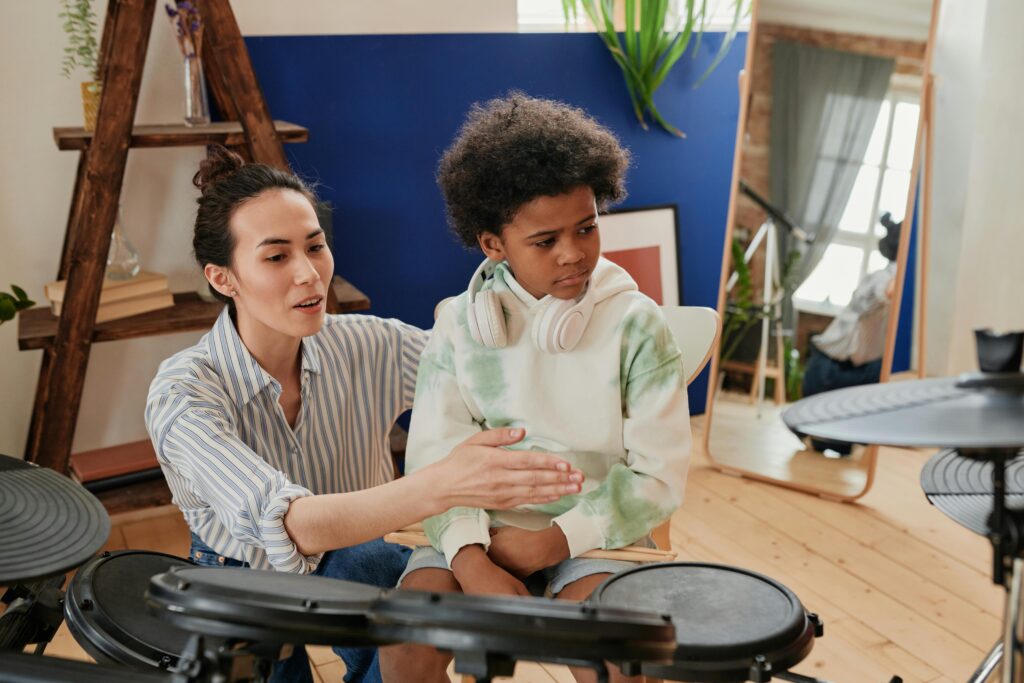
Kinesthetic learners need hands-on, physical engagement. They often learn best when allowed to experiment, tap rhythms, or connect music to movement. For these students, learning happens through doing rather than seeing or hearing alone. A drum student who taps out rhythms with their hands before playing the full pattern exemplifies how movement aids understanding.
Why Music Reveals Learning Styles
Unlike many traditional subjects, music simultaneously engages multiple senses, sight, sound, and movement. This multi-sensory approach makes it easier to observe how a child naturally processes information:
A visual learner may light up when shown notes or diagrams.
An auditory learner might close their eyes and replicate a melody by ear.
A kinesthetic learner could jump right in, exploring rhythms or finger positions physically.
Music allows all three learning styles to be celebrated, supported, and developed.
Personalizing the Musical Experience
Effective music instruction adapts to each child. Instructors observe pacing, preferences, and personality to tailor lessons that match the student’s style. When learning feels natural and aligned with a child’s strengths, confidence grows, engagement increases, and progress accelerates.
For instance, a visual learner might receive more annotated materials, an auditory learner might focus on listening and repetition, and a kinesthetic learner might incorporate movement into every practice session. This personalized approach doesn’t just make lessons more effective, it makes them joyful.
Unlock Your Child’s Potential
Music lessons aren’t just about mastering an instrument, they’re about discovering how your child learns, thinks, and thrives. Understanding your child’s learning style gives you tools to nurture curiosity, resilience, and confidence across all areas of life.
Let your child experience the power of learning in a way that fits them best. Book a trial lesson today and watch them grow, shine, and discover their full potential through music.